Planning a Creative Wedding in Europe
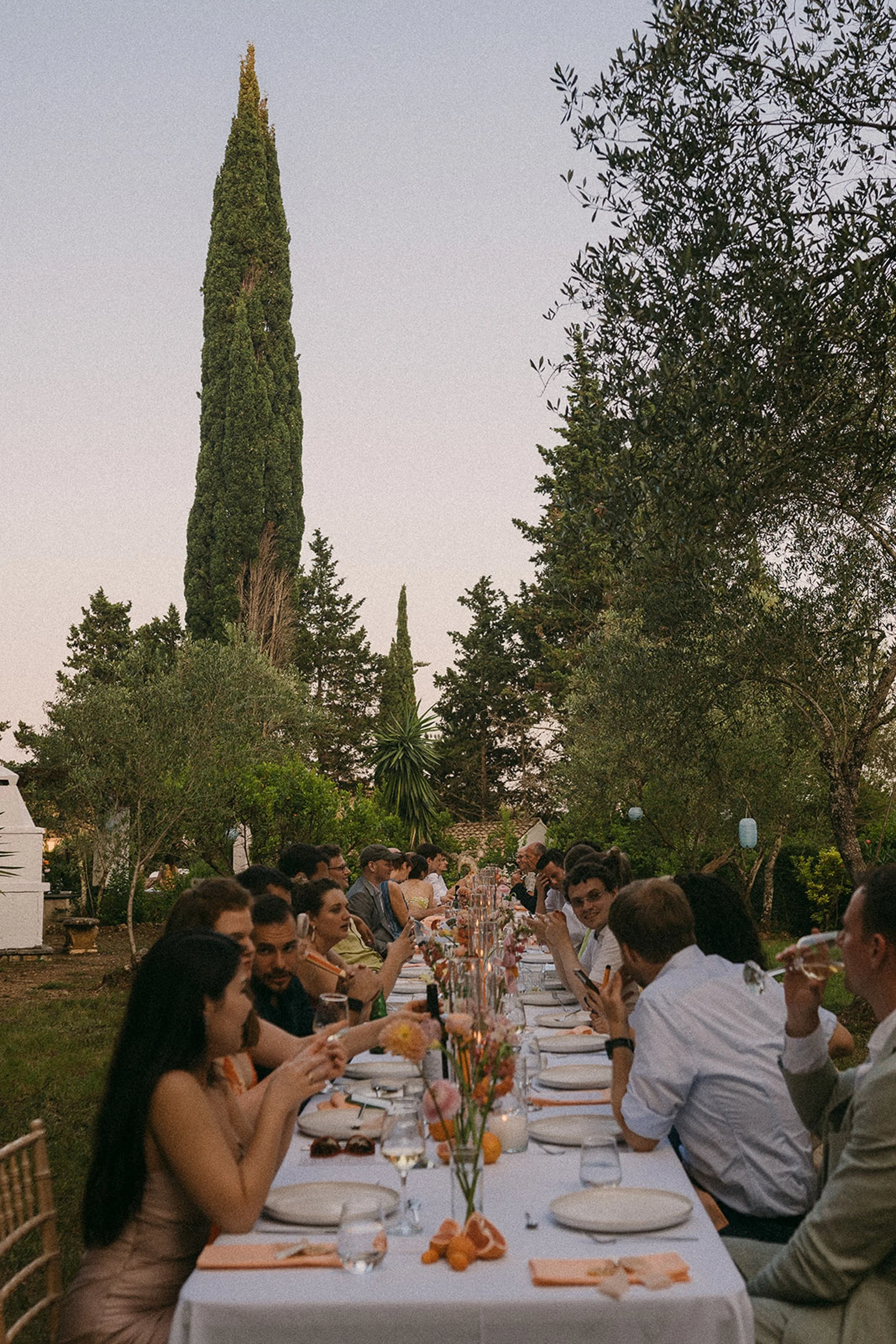
This is not a guide for planning a wedding efficiently. It’s an essay on planning one deliberately. For couples who care about continuity — in culture, in objects, in relationships — and who want their wedding in Europe to feel considered rather than produced.
If you work in a creative field, you already know this feeling:
you don’t want more options, you want better constraints.
That’s what this page is for.
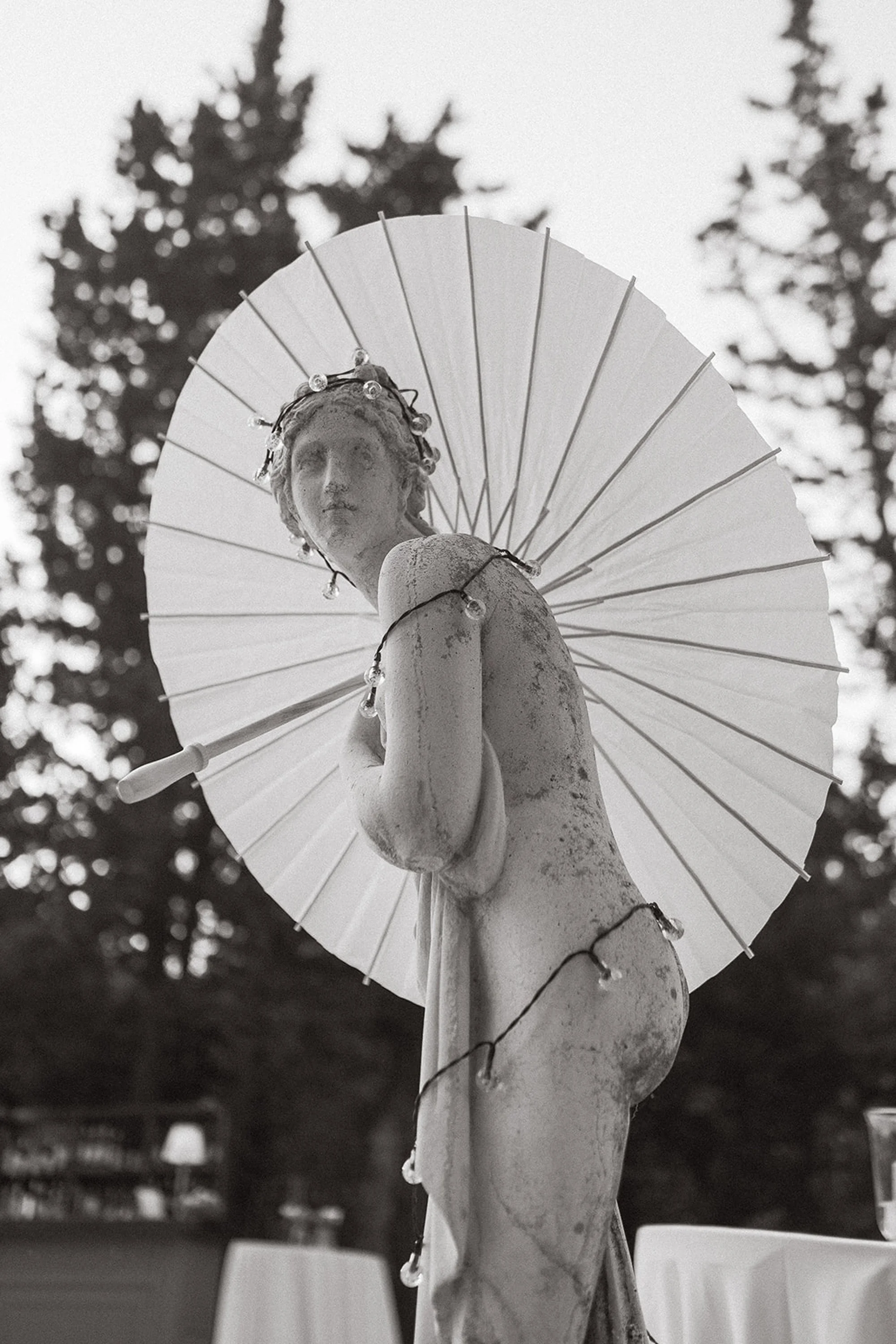
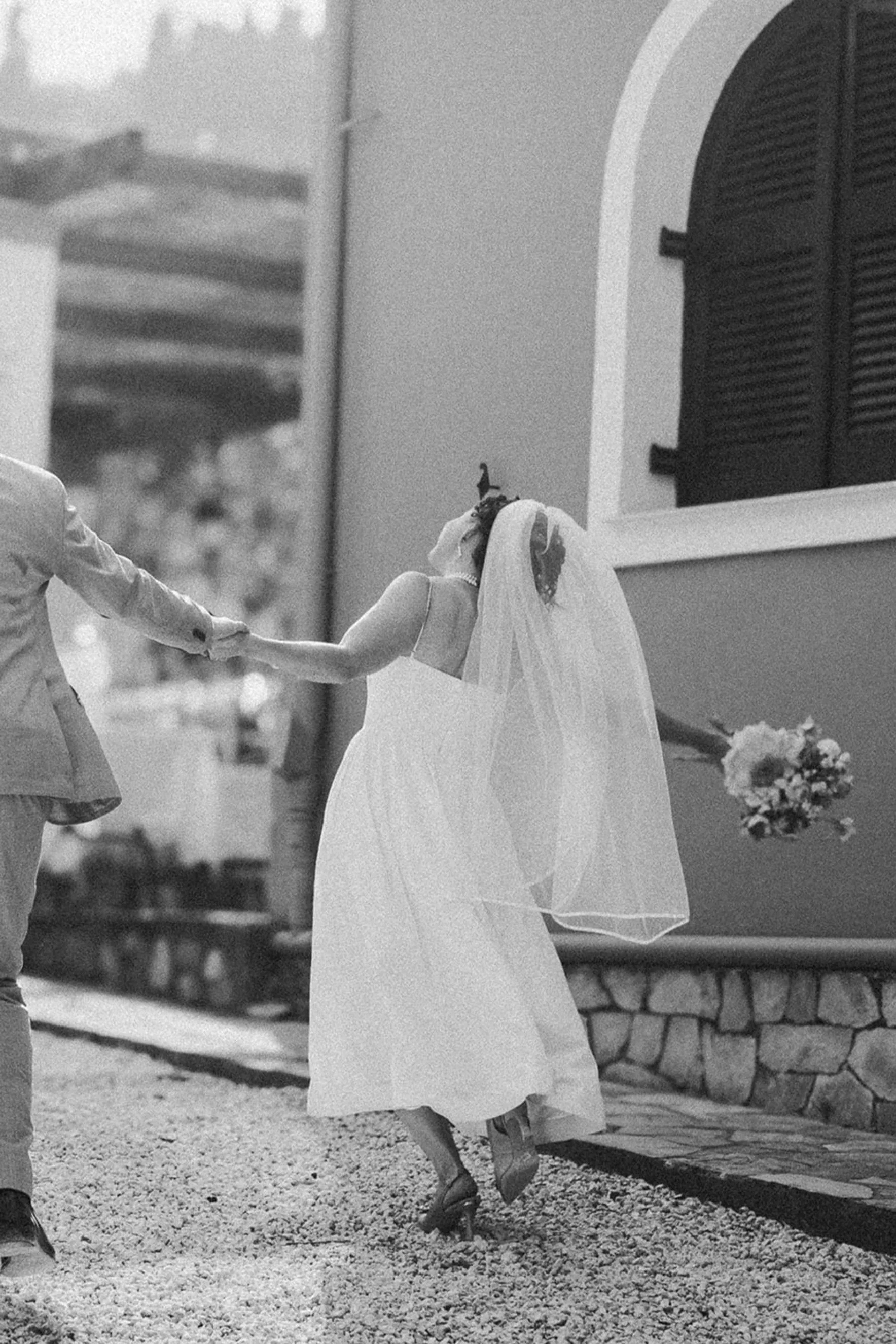
Most weddings fail in the same way most interiors, books, and cities fail:
they try to say too many things at once.
The couples I work with are rarely lacking ideas. On the contrary — they arrive with references, opinions, preferences, and a finely tuned sense for what feels right and what doesn’t. They notice when something is derivative. They know when a choice is being made for effect rather than necessity.
What they often lack is not taste, but structure.
A wedding, like any complex cultural object, needs limits in order to make sense. Without them, even the most beautiful elements begin to cancel each other out.
Planning a wedding in Europe — particularly in places like Italy, Provence, or along the Mediterranean — makes this tension more visible. These places already speak. They already have rhythm, material, and memory. The task is not to add meaning, but to avoid interrupting it.
The weddings that stay intimate — emotionally, not just numerically — are the ones that allow the couple to remain present rather than managerial. Conversation requires space. Listening requires time. Attention does not scale infinitely.
Scale Is Not Neutral
Guest count is often discussed as a social question, sometimes as a moral one, but rarely as what it truly is: a structural decision. Scale changes everything. It changes how sound behaves in a space. It changes how long it takes to move from one moment to another.
It changes how visible you are, and how much of yourselves you can retain. Many European spaces — especially older ones — are not designed for throughput. They are designed for gathering. When numbers exceed what the space can hold gracefully, intimacy collapses quickly. If conversation matters to you, if meals are central, if you want to remember people rather than manage them, scale must be treated with seriousness. There is no virtue in inviting more people than the structure of the day can support.
Time & The Misunderstanding of Flow
The most common failure in European weddings is temporal, not aesthetic. Too much is attempted in too little time, usually in an effort to “get everything in”. But European light does not cooperate with urgency. Meals resist compression. Historic spaces do not reward rigid sequencing. A good timeline is not efficient — it is forgiving. It allows mornings to unfold without agenda. It avoids unnecessary relocations. It permits dinners to stretch without anxiety about what comes next. The most meaningful moments often occur when nothing is scheduled — when people are not being moved, photographed, or directed. Protecting these spaces requires intention. If a timeline demands constant vigilance, it has already failed.
On Place, and Why It Is Not a Backdrop
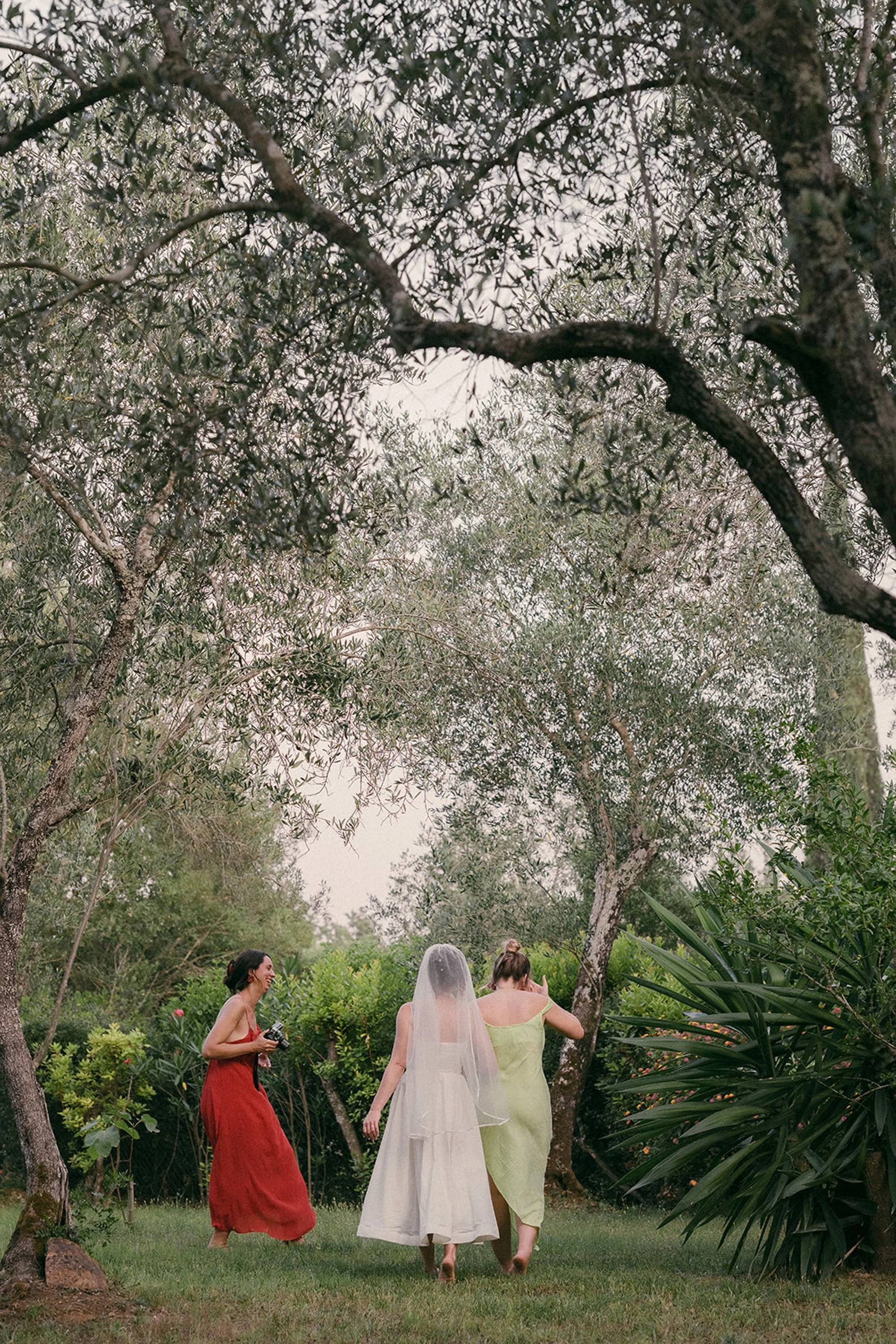
There is a particular kind of disappointment that occurs when a place is treated as scenery rather than context.
Europe is full of venues that photograph well and feel empty the moment people arrive. They promise atmosphere, but require constant explanation. Everything must be brought in, justified, styled, directed.
The places that work — quietly, reliably — tend to do the opposite. They limit you. They insist on a certain scale, a certain pace. They refuse excess.
A villa outside Florence suggests long afternoons whether you plan for them or not.
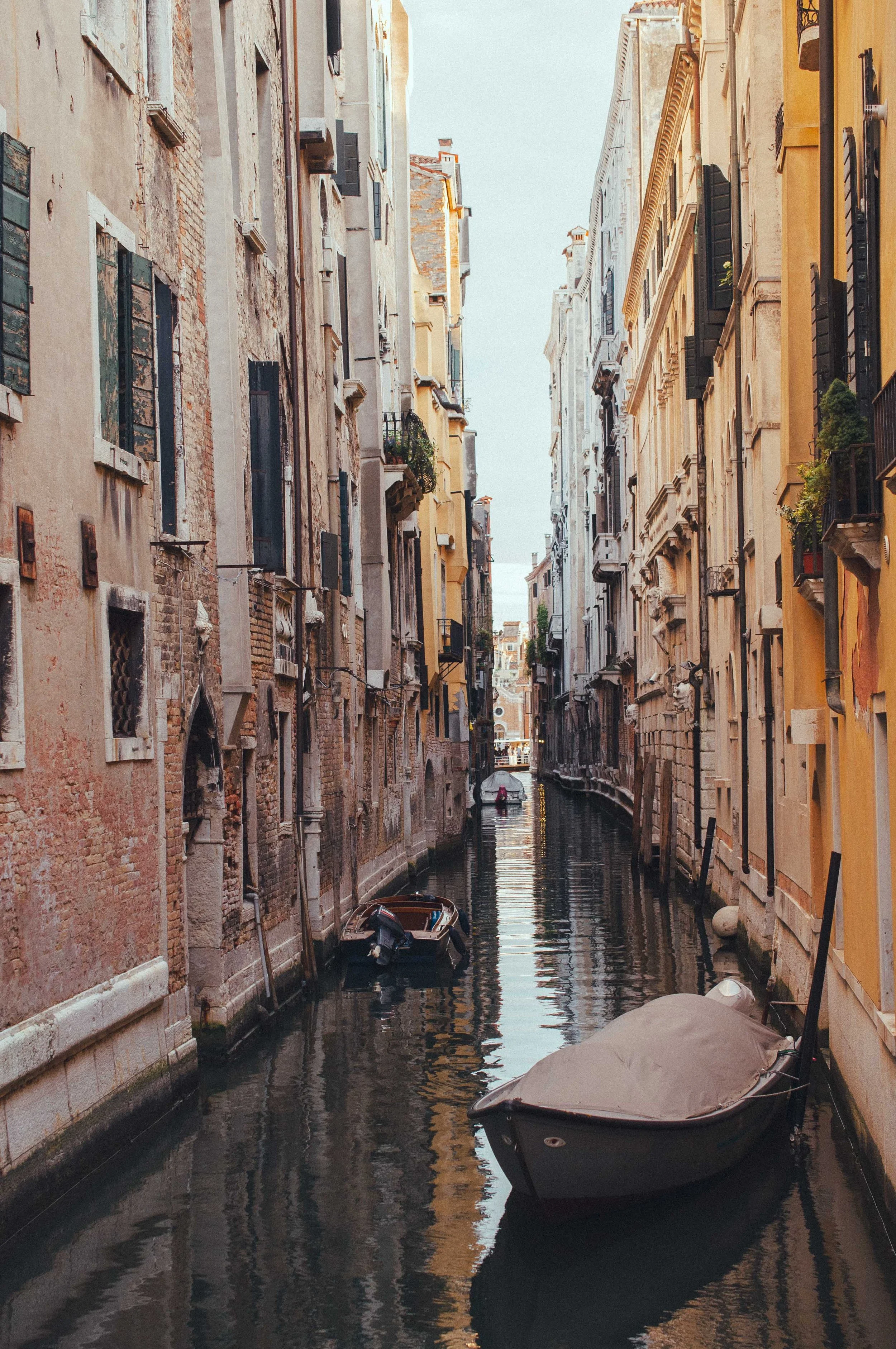
A palazzo in Venice resists efficiency; it stretches time sideways.
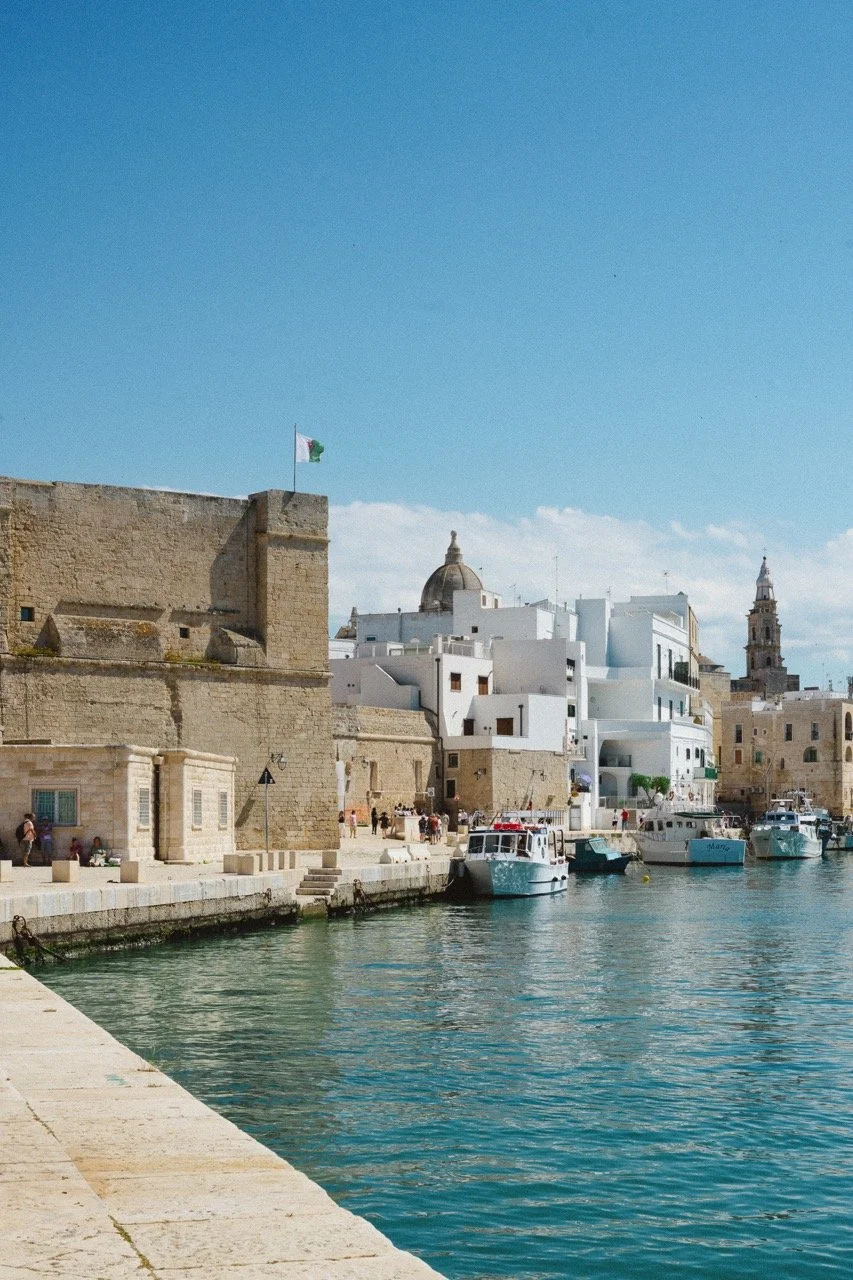
A house in Puglia does not cooperate with over-design — it expects simplicity and rewards seriousness.
The less lacquered parts of the Côte d’Azur or Provence ask for restraint, not performance.
Good places relieve couples of decisions. They make certain things unnecessary. They reduce the need for explanation. Guests understand how to behave because the place tells them.
If you find yourself compensating for a venue — explaining it, decorating against it, correcting it — you are likely working against the very thing you came for.
Taste, and the Problem of Accumulation
Taste is not revealed through accumulation. It’s revealed through subtraction. Creative couples often feel pressure to “express themselves” through every aspect of the wedding. The result is not personal — it’s crowded. Too many ideas compete for attention. Nothing is allowed to settle. A coherent wedding does not attempt to represent the full range of who you are. It selects a register and stays within it. This becomes easier when you stop thinking in terms of aesthetics and start thinking in terms of behaviour.
Ask not what something looks like, but what it does:
Does it slow people down or speed them up?
Does it invite conversation or observation?
Does it ask to be noticed, or does it hold quietly?
The most enduring weddings I’ve witnessed made very few gestures — but made them consistently. Materials repeated. Colours stayed close. Decisions echoed each other rather than competing. Taste, in this sense, is not decorative. It is editorial.
I photograph weddings across Europe — particularly in Italy — for couples who work in creative fields and care deeply about how things endure. Not in the sense of “timeless style”, but in the more difficult sense: objects, conversations, places, and relationships that remain meaningful when novelty has worn off.
The couples who find me usually don’t begin with a list of requirements. They begin with a shared sensibility. A way of moving through the world that values reading over scrolling, museums over trends, good films over spectacle, long meals over programmes. Their wedding is not an opportunity to perform something new. It is an extension of a life already being lived.
Photography as Record, Not Proof
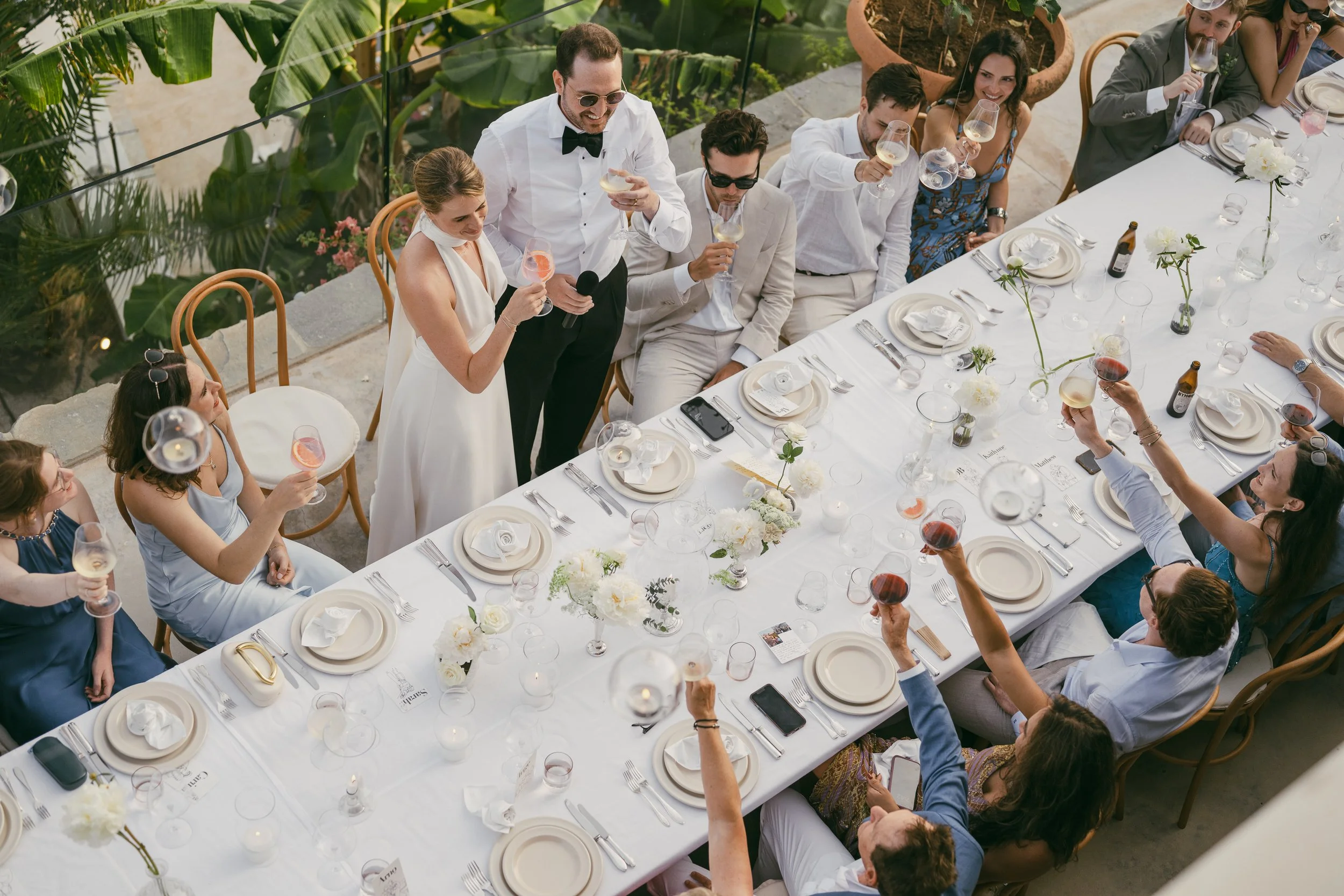
Photographs become important slowly. The images that last are rarely the ones that perform immediately. They are the ones that reveal more over time — that hold gesture, atmosphere, and relational detail.
This kind of photography cannot be rushed or tightly directed. It requires a photographer who understands social dynamics as much as visual ones, and a structure that allows moments to emerge rather than be produced.
What you are commissioning is not documentation of an event, but a future relationship with a day.
That relationship deepens when the images are allowed to remain open — when they don’t insist on a single reading.
Why Europe (and Why Italy, Especially)
Europe is not a neutral setting. It carries memory, rhythm, and resistance.
Italy in particular — whether Florence, Venice, Tuscany, Puglia, or the quieter edges of the lakes — does not tolerate being treated as a backdrop. It insists on participation.
Light moves slowly, then disappears.
Meals take the time they take.
Architecture holds its ground.
The weddings that make sense here are the ones that listen. They don’t import concepts wholesale. They allow the place to lead.
Much of my work takes place in Italy, as well as Provence and the Côte d’Azur — in locations chosen not for status, but for character. Places that already know how to gather people.
Working Quietly, With Attention
My approach to photography is grounded in presence rather than direction.
I don’t believe in staging what already exists. I’m interested in the way people inhabit space, in gestures that are not performed for the camera, in the social dynamics that reveal themselves when attention is not being demanded.
The photographs that matter most are rarely the ones that explain themselves immediately. They gain value over time, as memory does.
This way of working requires trust — from the couple, and from the structure of the day itself.
A Particular Kind of Couple
The people who reach out to me are often designers, architects, writers, academics, or work in cultural fields. They are articulate, visually literate, and comfortable with nuance.
They tend to dislike being told what to do.
They value conversation over instruction.
They are not interested in reproducing something they’ve seen before.
What they are looking for is not validation, but alignment.
If This Feels Familiar
If you’re planning a wedding in Europe — particularly in Italy — and care more about atmosphere than display, more about longevity than novelty, more about experience than optimisation, then this way of working may resonate with you.
Not because it offers answers, but because it reflects a shared way of seeing.
This is the kind of work I do.
These are the kinds of couples I work with.
If you recognise yourself here, that recognition is the point.